 -----
# Sea pen
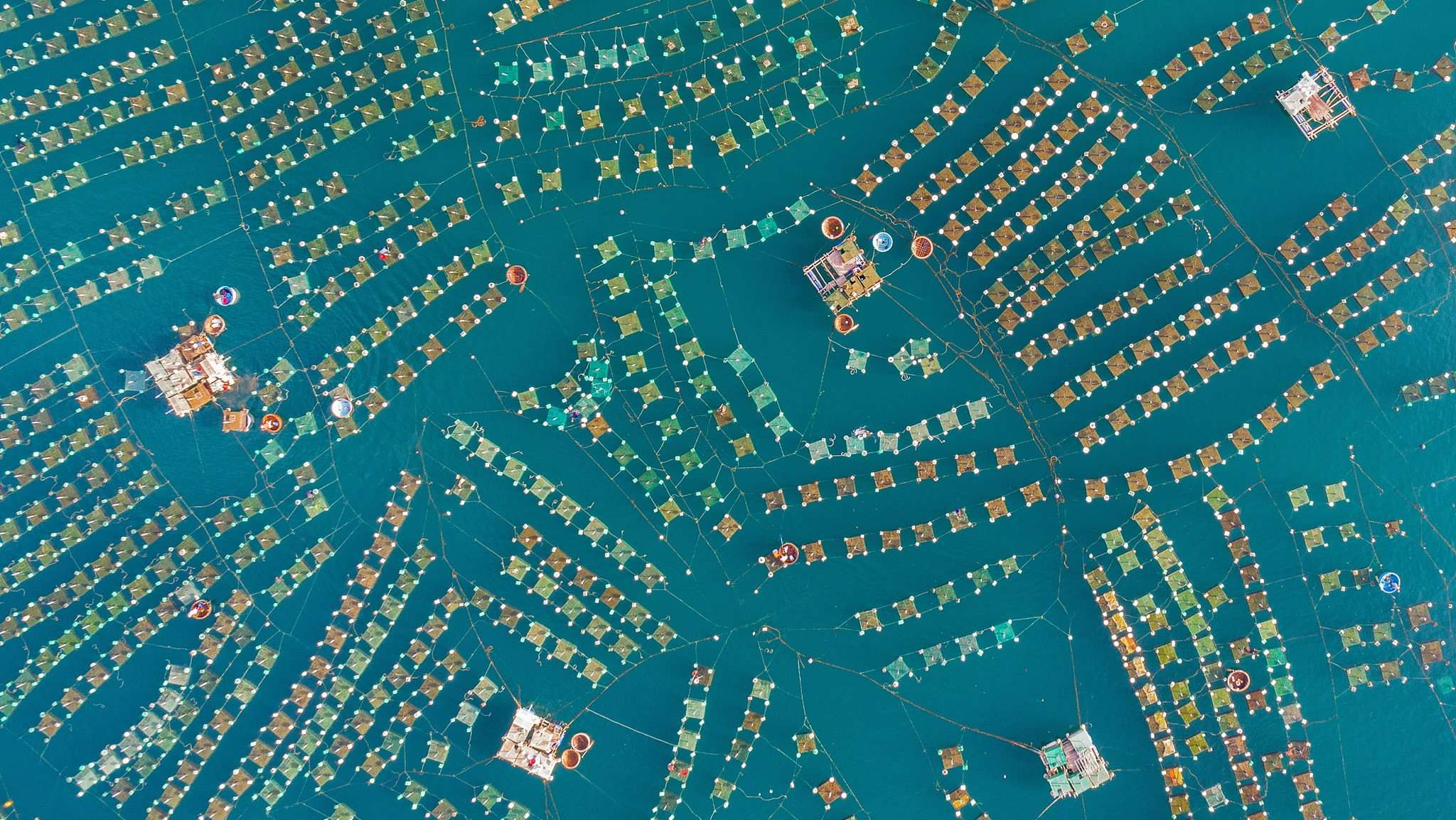
A sea pen (keramba tancab) is a type of fish-farming enclosure that uses a stationary, fixed-bottom,
or bottomless net to hold fish, allowing water to flow through it. It is distinct from a sea cage, which is a totally enclosed,
floating structure that is not anchored to the seafloor. Sea pens are larger than cages, stationary, and less intensive but less mobile than cages.
# [shape of the pen culture to reduce water turbidity](https://thaibinhduong.net/en/cage-lobster-farming-techniques/)
1. circular
2. Hexagon
3. polygon
[Nursury Cages](https://www.markfmaring.com/nursery/)
The cage pipes and cage accessories are made from HDPE 100 raw materials especially suited for continuous use in harsh environments,
and are based on decades of experience in HDPE technology. We guarantee the service life of the cage frame is at least 15 years.
Our nets are made from PE net with global cutting-edged technology and are treated with anti-UV process,
which guarantee the nets of high intensity, good security and long service life for at least 10 years.
|cage type |anti-storm capacity |ability of anti-wave |anti-flow capability |suitable place|
|-----------|---------------------|---------------------|---------------------|--------------|
|floating net cage| grade 11 |5 m |1.5m/s |semi-open area|
|elevating net cage|grade 13 |6 m|1.5m/s |typoon prone area|
|square net cage |grade 9 |3 m |1.0m/s |inland sea and lake|
|leisure net cage |grade 8 |3 m |1.0m/s |tourism resort|
Ornate or spiny rock lobster (Panulirus ornatus) is the most important cultured species but P. hormarus, P. longipes and P. stimpsoni are also cultured.
There are approximately 33,000 grow-out cages of which 17,000 are located in the coastal waters of Khanh Hoa province.
-----
# Sea pen
A sea pen (keramba tancab) is a type of fish-farming enclosure that uses a stationary, fixed-bottom,
or bottomless net to hold fish, allowing water to flow through it. It is distinct from a sea cage, which is a totally enclosed,
floating structure that is not anchored to the seafloor. Sea pens are larger than cages, stationary, and less intensive but less mobile than cages.
# [shape of the pen culture to reduce water turbidity](https://thaibinhduong.net/en/cage-lobster-farming-techniques/)
1. circular
2. Hexagon
3. polygon
[Nursury Cages](https://www.markfmaring.com/nursery/)
The cage pipes and cage accessories are made from HDPE 100 raw materials especially suited for continuous use in harsh environments,
and are based on decades of experience in HDPE technology. We guarantee the service life of the cage frame is at least 15 years.
Our nets are made from PE net with global cutting-edged technology and are treated with anti-UV process,
which guarantee the nets of high intensity, good security and long service life for at least 10 years.
|cage type |anti-storm capacity |ability of anti-wave |anti-flow capability |suitable place|
|-----------|---------------------|---------------------|---------------------|--------------|
|floating net cage| grade 11 |5 m |1.5m/s |semi-open area|
|elevating net cage|grade 13 |6 m|1.5m/s |typoon prone area|
|square net cage |grade 9 |3 m |1.0m/s |inland sea and lake|
|leisure net cage |grade 8 |3 m |1.0m/s |tourism resort|
Ornate or spiny rock lobster (Panulirus ornatus) is the most important cultured species but P. hormarus, P. longipes and P. stimpsoni are also cultured.
There are approximately 33,000 grow-out cages of which 17,000 are located in the coastal waters of Khanh Hoa province.
 [auatech study](https://ijsr.internationaljournallabs.com/index.php/ijsr/article/view/1291/878)
[PT Japfa feed nursury](https://www.japfacomfeed.co.id/operational-area?page=16)
[Cara Budidaya Kerapu](#kerapu)
[auatech study](https://ijsr.internationaljournallabs.com/index.php/ijsr/article/view/1291/878)
[PT Japfa feed nursury](https://www.japfacomfeed.co.id/operational-area?page=16)
[Cara Budidaya Kerapu](#kerapu)
 * [Lamun Thalassia hemprichii](https://blueventures.org/id/penelitian-baru-pertanian-teripang-membantu-padang-lamun-berkembang/)
* [Project seagrass(lamun)](https://www.projectseagrass.org/)
* [teripang hatchery](https://www.instagram.com/reel/DNzw4Ml6Nwh/)
* [juvinille teripang](https://media.neliti.com/media/publications/408409-efektivitas-metode-pendederan-juvenil-te-6cda454a.pdf)
Key Characteristics of Gondol Formula Feed
-----------
Target Species: Primarily developed for the nursery of scalloped spiny lobster (Panulirus homarus) and grouper hatchery production.
Nutritional Profile:
* Protein: Contains a "middle" protein level of approximately 46.51%, which is lower than some commercial grouper pellets (approx. 53%) but higher than standard shrimp pellets (approx. 33%).
* Fat: Includes a fat content of roughly 7.07%.
* Water Stability: A defining feature is its high stability; the pellets are designed to remain intact in water for 10–12 hours before breaking down. This durability is crucial for slow-feeding species like lobsters.
Performance: Research indicates that lobster fry fed with the Gondol formula often show significantly higher survival rates (e.g., 39.0%) compared to those fed with standard commercial grouper or shrimp pellets.
Recommended Feed Formula for 1–5g Juveniles
---
Based on research from the Research Institute for Mariculture (RIM) and other tropical rock lobster studies, the following composition is ideal for inducing frequent and healthy molts:
* Crude Protein (50%–55%): Essential for tissue growth between molts. Formulations like the ACIAR project basal feed suggest that increasing protein from 47% to 55% significantly improves specific growth rates in 1.8g juveniles.
* Total Lipids (9%–10%): High energy is needed; 9% lipid levels have been found to yield maximum growth and digestive enzyme activity.
* Cholesterol (0.5%–1.0%): Crustaceans cannot synthesize cholesterol, which is the precursor to the molting hormone ecdysone. Inclusion of 0.5% is standard in the IMRAD Gondol formula.
* Astaxanthin (100–800 mg/kg): Acts as a powerful antioxidant that reduces oxidative stress during the vulnerable molting period.
Key Additives to Stimulate Molting
---
|Additive |Purpose |Recommended Level|
|-----------|---------|-----------------|
|Calcium (Ca) |Increases molting frequency and survival; 2% supplementation is often optimal.| 2.0% in feed|
|Phospholipids |Aids in the absorption of cholesterol and other sterols essential for ecdysone production.| 1.5% – 2.0%|
|Exuviation Element |Specialized commercial "molting" hormones or elements sometimes included in patented crayfish/crustacean pellets. |0.05% – 0.1%|
Feeding Management for 1–5g Lobsters
---
* Pellet Size: For 1–5g lobsters, a 2.0 mm to 3.0 mm noodle-shaped pellet is most efficient. Larger 5 mm pellets result in significantly higher waste for this size class.
* Frequency: Feeding twice daily (at 09:00 and 15:00) is common, but research on the IMRAD Gondol formula suggests that for juveniles under 5g, increasing frequency to 3–4 times can better support the rapid metabolism required for frequent molting.
* Water Stability: The pellet must remain stable for at least 10 hours. Using binders like wheat gluten or carboxymethyl cellulose ensures the nutrients don't leach before the slow-feeding lobster consumes them.
Earth Sciences New Zealand | NIWA
* [Lamun Thalassia hemprichii](https://blueventures.org/id/penelitian-baru-pertanian-teripang-membantu-padang-lamun-berkembang/)
* [Project seagrass(lamun)](https://www.projectseagrass.org/)
* [teripang hatchery](https://www.instagram.com/reel/DNzw4Ml6Nwh/)
* [juvinille teripang](https://media.neliti.com/media/publications/408409-efektivitas-metode-pendederan-juvenil-te-6cda454a.pdf)
Key Characteristics of Gondol Formula Feed
-----------
Target Species: Primarily developed for the nursery of scalloped spiny lobster (Panulirus homarus) and grouper hatchery production.
Nutritional Profile:
* Protein: Contains a "middle" protein level of approximately 46.51%, which is lower than some commercial grouper pellets (approx. 53%) but higher than standard shrimp pellets (approx. 33%).
* Fat: Includes a fat content of roughly 7.07%.
* Water Stability: A defining feature is its high stability; the pellets are designed to remain intact in water for 10–12 hours before breaking down. This durability is crucial for slow-feeding species like lobsters.
Performance: Research indicates that lobster fry fed with the Gondol formula often show significantly higher survival rates (e.g., 39.0%) compared to those fed with standard commercial grouper or shrimp pellets.
Recommended Feed Formula for 1–5g Juveniles
---
Based on research from the Research Institute for Mariculture (RIM) and other tropical rock lobster studies, the following composition is ideal for inducing frequent and healthy molts:
* Crude Protein (50%–55%): Essential for tissue growth between molts. Formulations like the ACIAR project basal feed suggest that increasing protein from 47% to 55% significantly improves specific growth rates in 1.8g juveniles.
* Total Lipids (9%–10%): High energy is needed; 9% lipid levels have been found to yield maximum growth and digestive enzyme activity.
* Cholesterol (0.5%–1.0%): Crustaceans cannot synthesize cholesterol, which is the precursor to the molting hormone ecdysone. Inclusion of 0.5% is standard in the IMRAD Gondol formula.
* Astaxanthin (100–800 mg/kg): Acts as a powerful antioxidant that reduces oxidative stress during the vulnerable molting period.
Key Additives to Stimulate Molting
---
|Additive |Purpose |Recommended Level|
|-----------|---------|-----------------|
|Calcium (Ca) |Increases molting frequency and survival; 2% supplementation is often optimal.| 2.0% in feed|
|Phospholipids |Aids in the absorption of cholesterol and other sterols essential for ecdysone production.| 1.5% – 2.0%|
|Exuviation Element |Specialized commercial "molting" hormones or elements sometimes included in patented crayfish/crustacean pellets. |0.05% – 0.1%|
Feeding Management for 1–5g Lobsters
---
* Pellet Size: For 1–5g lobsters, a 2.0 mm to 3.0 mm noodle-shaped pellet is most efficient. Larger 5 mm pellets result in significantly higher waste for this size class.
* Frequency: Feeding twice daily (at 09:00 and 15:00) is common, but research on the IMRAD Gondol formula suggests that for juveniles under 5g, increasing frequency to 3–4 times can better support the rapid metabolism required for frequent molting.
* Water Stability: The pellet must remain stable for at least 10 hours. Using binders like wheat gluten or carboxymethyl cellulose ensures the nutrients don't leach before the slow-feeding lobster consumes them.
Earth Sciences New Zealand | NIWA
graph LR;
%% Ocean sea water
%% x
subgraph Pacific["Pacific-Indonesia"]
direction LR
ocean_Temperature["Pacific surface T= approx 26~30C"]
end
click ocean_Temperature "https://www.globalseafood.org/advocate/trials-test-effects-of-hormone-supplemented-feed-on-sex-reversal-of-freshwater-prawns/" "Surface ocean temperature"
---
graph LR;
%% Freshwater prawn sex reversal
%% x
subgraph SexReverse["Sex Reversal"]
direction LR
prawn_Male["Methyltestosterone experiment"]
prawn_Female["Dopamine experiment
Ovaprim Fish Hormone Domperidone Sgnrha Injection"] sex_reverse_for_tilapia["Tilapia sex reversal in fry stage"] end FWprawn["Mixed Culture"] FWprawn_M["Male mono culture
Teritorial"] FWprawn_F["Female mono culture
higher density
more uniform
less teritorial vs male"] click SexReverse "https://www.globalseafood.org/advocate/trials-test-effects-of-hormone-supplemented-feed-on-sex-reversal-of-freshwater-prawns/" "Sex Reversal Post Larva" click sex_reverse_for_tilapia "https://www.globalseafood.org/advocate/artificial-incubation-hormonal-sex-reversal-promoted-tilapia-boom/" "Sex Reversal for Tilapia"
Ovaprim Fish Hormone Domperidone Sgnrha Injection"] sex_reverse_for_tilapia["Tilapia sex reversal in fry stage"] end FWprawn["Mixed Culture"] FWprawn_M["Male mono culture
Teritorial"] FWprawn_F["Female mono culture
higher density
more uniform
less teritorial vs male"] click SexReverse "https://www.globalseafood.org/advocate/trials-test-effects-of-hormone-supplemented-feed-on-sex-reversal-of-freshwater-prawns/" "Sex Reversal Post Larva" click sex_reverse_for_tilapia "https://www.globalseafood.org/advocate/artificial-incubation-hormonal-sex-reversal-promoted-tilapia-boom/" "Sex Reversal for Tilapia"
graph LR
%% Benur Vannamei
BenurVPL_10["Vannamei Post Larva -10 days"]
BenurVPL_15["Vannamei Post Larva - 15 days"]
BenurVPL_10 ---> BenurVPL_15
BenurVPL_10 --->|"sell and ship to customer"| qnt_1_1
BenurVPL_15 --->|"sell and ship to customer"| qnt_1_2
subgraph select_req1_steps ["selection criteria"]
direction LR
select_strong["discard slow molting PL"]
end
BenurVPL_10 <---> select_req1_steps
subgraph shipment_req1_steps ["shipment to customer PL10 < 6 ~ 8 hours
PL-15 < 12~24 hours"] direction LR Stress_Test_1_1["stress test prior to packing
salinity test
salinity 0, 30 min then tank salinity 30 min
count life > 85%"] weight_Test_1_1["number of PL count per PL1,Pl10,P12,P? statistics"] salinity["Both require 26–30°C and salinity 25–35 ppt"] qnt_1_1["PL-10 qnty: 5000-10000/L(seawater-1 L)
+2/3 filled with O2(2L)"] qnt_1_2["PL-15 qnty: 3000-5000/L(seawater-1 L)
2/3 filled with O2(2L)"] end click BenurVPL_10 "https://www.seafdec.org.ph/2011/seabass-hatchery/" "Vannemei Benur PL-10" click BenurVPL_15 "https://www.seafdec.org.ph/2011/seabass-hatchery/" "Vannemei Benur PL-15"
---
PL-15 < 12~24 hours"] direction LR Stress_Test_1_1["stress test prior to packing
salinity test
salinity 0, 30 min then tank salinity 30 min
count life > 85%"] weight_Test_1_1["number of PL count per PL1,Pl10,P12,P? statistics"] salinity["Both require 26–30°C and salinity 25–35 ppt"] qnt_1_1["PL-10 qnty: 5000-10000/L(seawater-1 L)
+2/3 filled with O2(2L)"] qnt_1_2["PL-15 qnty: 3000-5000/L(seawater-1 L)
2/3 filled with O2(2L)"] end click BenurVPL_10 "https://www.seafdec.org.ph/2011/seabass-hatchery/" "Vannemei Benur PL-10" click BenurVPL_15 "https://www.seafdec.org.ph/2011/seabass-hatchery/" "Vannemei Benur PL-15"
graph LR
%% Kerapu and seabass
%% seacucumber deposit feeder. Its diet consists of organic matter and microorganisms that live on and in the sand (the substrate).
FC0["Floating cage
Grading"] FC1["Keramba tancap
Berpasir dibawah
Grading"] FC2["Keramba dasar (0.5 m dari dasar)
Grading"] P0["Pond - outdoor"] P1(["Pond - indoor"]) subgraph pythoplankton["Marine Phytoplankton and/or freshwater pythoplanton
Media for MicroAlgae"] direction LR %% Microalgae cultivation can be carried out with freshwater, seawater, water from estuaries, wastewater from agricultural, industrial operations and domestic wastewater [15]. %% Algae media refers to the solution or culture in which algae grow. %% Nutrient that contained in the tofu wastewater are very useful for the production of Chlorella sp. %% Chlorella sp. usually grows in seawater culture_both["Chlorella vulgaris
is green freshwater microalgae
but seawater tolerance T: 26-30C
an remove salt"] culture_pytho["Culture Marine pythoplankton/MicroAlgae (chlorella sp)"] culture_spiriluna["Spirulina platensis microalgee Blue-green
brackish tolerance
pH sensitivity pH:8~11,T:30-35C"] %% Spiriluna need to adjust fertelizer with pH above seawater %% EC: 98~30ms/cm %% High temperature: 30-35C culture_fresh_pytho["culture freshwater microalgae Spirulina Plantis and Chlorella vulgaris"] end subgraph MacroAlgae["culture seaweeds/MacroAlage"] direction LR seaweed["life green/brown seaweed"] -->Powder_seaweed["Make dry powder seaweed"] seaweed---> Process_1["harvest the seed for future propagation"] end subgraph plankton["Zooplankton Culture"] R0{"Rotifer Large size 20-25°C
Euryhaline"} R1{"Rotifer Small size 28-35°C
Low salinity"} Copepods{"Copepods Bigger than Rotifer"} MicroAlgae["Green phytoplanktons"] --->R0 MicroAlgae -->R1 MicroAlgae ----> Copepods end Seabass1[/"Seabass Mature change sex 5kg ♀
Broodstock Rearing"/] Kerapu1[/"Grouper Mature change sex ♂
Broodstock Rearing"/] Kerapu(["Grouper: female at birth: ♀
Larva Rearing"]) --> |"size: 8-12cm cuci air tawar"| FC0 --> |"mature/adult size"| FC22["floating cage bigger net size
and/or tambak lebih besar ↑O2
Brookstock around 3kg"] Kerapu -->|tidak perlu| FC1 --> FC22 --> Kerapu1 Seabass(["Asian Seabass: Male at birth: ♂
Larva Rearing"]) --> |"size: 8 - 12cm bersisik tidak perlu pasir"| FC0 -->|"Mature/adult size"| FC22 --> Seabass1 Lobster["Lobster Rearing"] -->FC2 click culture_fresh_pytho "https://algaeresearchsupply.com/products/algae-research-supply-algae-culture-chlorella-pyrenoidosa?srsltid=AfmBOoqYbKG86RMM1kP_KYZvTHlMmcgQWKry5cNg-7a28B-AxddtVZfK" "culture Chlorella" click Seabass "https://www.seafdec.org.ph/2011/seabass-hatchery/" "Seabass Hatchery" click Kerapu "https://www.seafdec.org.ph/hatchery-seedstock/" "Grouper Hatchery" style Kerapu1 fill:gold, color:black style Seabass1 fill:gold, color:black style R0 fill:blue, color:white style R1 fill:green, color: black style culture_both fill:green, color:white
Grading"] FC1["Keramba tancap
Berpasir dibawah
Grading"] FC2["Keramba dasar (0.5 m dari dasar)
Grading"] P0["Pond - outdoor"] P1(["Pond - indoor"]) subgraph pythoplankton["Marine Phytoplankton and/or freshwater pythoplanton
Media for MicroAlgae"] direction LR %% Microalgae cultivation can be carried out with freshwater, seawater, water from estuaries, wastewater from agricultural, industrial operations and domestic wastewater [15]. %% Algae media refers to the solution or culture in which algae grow. %% Nutrient that contained in the tofu wastewater are very useful for the production of Chlorella sp. %% Chlorella sp. usually grows in seawater culture_both["Chlorella vulgaris
is green freshwater microalgae
but seawater tolerance T: 26-30C
an remove salt"] culture_pytho["Culture Marine pythoplankton/MicroAlgae (chlorella sp)"] culture_spiriluna["Spirulina platensis microalgee Blue-green
brackish tolerance
pH sensitivity pH:8~11,T:30-35C"] %% Spiriluna need to adjust fertelizer with pH above seawater %% EC: 98~30ms/cm %% High temperature: 30-35C culture_fresh_pytho["culture freshwater microalgae Spirulina Plantis and Chlorella vulgaris"] end subgraph MacroAlgae["culture seaweeds/MacroAlage"] direction LR seaweed["life green/brown seaweed"] -->Powder_seaweed["Make dry powder seaweed"] seaweed---> Process_1["harvest the seed for future propagation"] end subgraph plankton["Zooplankton Culture"] R0{"Rotifer Large size 20-25°C
Euryhaline"} R1{"Rotifer Small size 28-35°C
Low salinity"} Copepods{"Copepods Bigger than Rotifer"} MicroAlgae["Green phytoplanktons"] --->R0 MicroAlgae -->R1 MicroAlgae ----> Copepods end Seabass1[/"Seabass Mature change sex 5kg ♀
Broodstock Rearing"/] Kerapu1[/"Grouper Mature change sex ♂
Broodstock Rearing"/] Kerapu(["Grouper: female at birth: ♀
Larva Rearing"]) --> |"size: 8-12cm cuci air tawar"| FC0 --> |"mature/adult size"| FC22["floating cage bigger net size
and/or tambak lebih besar ↑O2
Brookstock around 3kg"] Kerapu -->|tidak perlu| FC1 --> FC22 --> Kerapu1 Seabass(["Asian Seabass: Male at birth: ♂
Larva Rearing"]) --> |"size: 8 - 12cm bersisik tidak perlu pasir"| FC0 -->|"Mature/adult size"| FC22 --> Seabass1 Lobster["Lobster Rearing"] -->FC2 click culture_fresh_pytho "https://algaeresearchsupply.com/products/algae-research-supply-algae-culture-chlorella-pyrenoidosa?srsltid=AfmBOoqYbKG86RMM1kP_KYZvTHlMmcgQWKry5cNg-7a28B-AxddtVZfK" "culture Chlorella" click Seabass "https://www.seafdec.org.ph/2011/seabass-hatchery/" "Seabass Hatchery" click Kerapu "https://www.seafdec.org.ph/hatchery-seedstock/" "Grouper Hatchery" style Kerapu1 fill:gold, color:black style Seabass1 fill:gold, color:black style R0 fill:blue, color:white style R1 fill:green, color: black style culture_both fill:green, color:white
flowchart TD
T["Tilapia
iBEST (all Male) or
iEXCEL (Mixed-sex)"] subgraph plankton["plankton feed to larvae"] PyPL1["Pythoplanton"] R0{"Rotifer Large ΔT,
20°C-25°C,Euryhaline
B. plicatilis (L)
171-238µm "} R1{"Rotifer Small ΔT,
28°C-35°C, low salinity
B. rotundiformis (S)
121-162µm"} Copepods["Copepods"] Artemia["Artemia
Brine shrmp"] eggs["Fish Eggs"] PyPL1 --> Artemia PyPL1 --> R0 PyPL1 --> R1 end subgraph hatchery["Hatchery Market Depend on Market"] direction LR Eggs["Eggs"] --> Larvae["Post Larvae"] -->Juvinille["Juvinille"] end subgraph growup ["growup Market size"] direction LR Market["different stage of Market"] end subgraph artemiaGrowth ["Artemeia Growth up Culture"] direction LR artemeia_eggs["Artemaia Eggs and larvae for feed"] end subgraph vitamin ["Vitamin C and B12 complex"] direction LR vitamin_feed["feed to rotifer prior to the feed for Hatchery"] end subgraph Pellet_Custard ["Pellet or Custaard"] direction LR Pellet_feed["Pellet feed"] custard["wet or frozen feed"] end T --> hatchery plankton --> hatchery hatchery --> growup style eggs fill:pink, color:black click hatchery "https://www.seafdec.org.ph/hatchery-seedstock/" "Grouper Hatchery" click Copepods "https://animalfact.com/wp-content/uploads/2024/06/Copepods-Copepoda.jpg" "Copepods"
iBEST (all Male) or
iEXCEL (Mixed-sex)"] subgraph plankton["plankton feed to larvae"] PyPL1["Pythoplanton"] R0{"Rotifer Large ΔT,
20°C-25°C,Euryhaline
B. plicatilis (L)
171-238µm "} R1{"Rotifer Small ΔT,
28°C-35°C, low salinity
B. rotundiformis (S)
121-162µm"} Copepods["Copepods"] Artemia["Artemia
Brine shrmp"] eggs["Fish Eggs"] PyPL1 --> Artemia PyPL1 --> R0 PyPL1 --> R1 end subgraph hatchery["Hatchery Market Depend on Market"] direction LR Eggs["Eggs"] --> Larvae["Post Larvae"] -->Juvinille["Juvinille"] end subgraph growup ["growup Market size"] direction LR Market["different stage of Market"] end subgraph artemiaGrowth ["Artemeia Growth up Culture"] direction LR artemeia_eggs["Artemaia Eggs and larvae for feed"] end subgraph vitamin ["Vitamin C and B12 complex"] direction LR vitamin_feed["feed to rotifer prior to the feed for Hatchery"] end subgraph Pellet_Custard ["Pellet or Custaard"] direction LR Pellet_feed["Pellet feed"] custard["wet or frozen feed"] end T --> hatchery plankton --> hatchery hatchery --> growup style eggs fill:pink, color:black click hatchery "https://www.seafdec.org.ph/hatchery-seedstock/" "Grouper Hatchery" click Copepods "https://animalfact.com/wp-content/uploads/2024/06/Copepods-Copepoda.jpg" "Copepods"
flowchart TB
subgraph OCEAN9 ["fas:fa-ship OCEAN 9 "]
direction LR
TP([Telaga Punggur])-->|ferry 11:00 web kapaltiket.com| A([BENAN]) --> |"00:45"| B([Tajuh Biru]) --> C(["Sei Tenam"]) --> D(["Senayang"]) <--->|"from 07:15 Pancur"| E(["Pancur"])
end
subgraph DRAGON5 ["fas:fa-ship DRAGON 5"]
direction LR
TP1(["Telaga punggur"]) --> CC(["Sei Tenam"])-->JG(["Jagoh"])
end
subgraph Anambas ["fas:fa-ship Anambas"]
direction LR
TP2(["Telaga Punggur"]) --"Rp. 494k"--> Letung --"Rp 495k"--> Terempa(["Terempa"])
end
subgraph Bintan["Pulau Bintan/Tanjung Pinang"]
direction LR
BTP(["Tanjung Pinang"])
end
TP <--.--> TP1 <--.--> TP2
style A fill: black, color: white
style B fill:grey, color:#fff
style TP fill:blue, color: whit
style TP1 fill:blue, color: white
style TP2 fill:blue, color: white
click BTP "https://www.welcometobintan.com/images/map.jpg" "Tanjung Pinang"
deposit feeder. Its diet consists of organic matter and microorganisms that live on and in the sand (the substrate).
flowchart LR
subgraph subgraph1["Benur Bening Lobster"]
direction TB
top1["🦞 ≤ 2 gr (≤ 2months)
SR 30%~40%
Nature < 0.01%"] --> bottom1["🦞 ≥ 5gr (2 - 3 months) SR ≥ 70%~80%"] end subgraph subgraph2["Top floating or/and
Bottom floating cage(Krankeng)"] direction TB top2[top] --> bottom2[bottom] end subgraph subgraph3["Top floating or/and
Bottom floating cage(Krankeng)"] direction TB top3[topx] --> bottom3[bottomx] end outside:::asNode --> subgraph1:::asNode outside ---> top2 -->top3 style subgraph2 fill:orange classDef asNode fill:grey, color:orange
SR 30%~40%
Nature < 0.01%"] --> bottom1["🦞 ≥ 5gr (2 - 3 months) SR ≥ 70%~80%"] end subgraph subgraph2["Top floating or/and
Bottom floating cage(Krankeng)"] direction TB top2[top] --> bottom2[bottom] end subgraph subgraph3["Top floating or/and
Bottom floating cage(Krankeng)"] direction TB top3[topx] --> bottom3[bottomx] end outside:::asNode --> subgraph1:::asNode outside ---> top2 -->top3 style subgraph2 fill:orange classDef asNode fill:grey, color:orange
flowchart LR
deposit_feeder("Deposit Feeder
seacucumber")
seacucumber")
pie title Investment ssharing
"PT Innovare" :75
"Mitra" : 15
"Desa" : 10
 |
|  |
Think of Pieces as a technical Tinkerbell from Peter Pan[^2].
[^2]: This is a fairytale about a forever young boy who takes a group of British children to his home island, Neverland.
Depending on how much cookie dough you eat, you’ll have about ==20-22== cookies from this recipe!
# [embedded html to pdf](https://www.encodian.com/blog/create-and-insert-a-document-approval-sheet-using-powerautomate-approval-data/)
|
Think of Pieces as a technical Tinkerbell from Peter Pan[^2].
[^2]: This is a fairytale about a forever young boy who takes a group of British children to his home island, Neverland.
Depending on how much cookie dough you eat, you’ll have about ==20-22== cookies from this recipe!
# [embedded html to pdf](https://www.encodian.com/blog/create-and-insert-a-document-approval-sheet-using-powerautomate-approval-data/)
b[^2]
🄱 Outdoor|Pakai HDPE| Symbol| |:-----------|:-----------------|:-------|:---------| |Floating cage| Outdoor | ① | |Keramba dasar
0.5m from bottom|Outdoor | ② | |Keramba tanjab (pens)| |③ | |Tambak/pond | Outdoor |④ | |hapa di tambak| Outdoor |⑤ | | | Indoor | ---------------- --------------- |Fish/Crustean | FCR wet/dry/
pellet(sink/float)|Culture Ponds
days/weeks/months|Stage Description
Larvae,Juvinele,Adult/
Temperature|Need fish meal| |:-------------|:------------------------------|:-----------|:-----------|:----------| |Tilapia |Easier and
no need much knowledge | |No need fish meal, soybeaan protein| |Tuna | 10:1|[swift memory safe](https://forums.swift.org/t/prospective-vision-optional-strict-memory-safety-for-swift/75090)|yes, due to fish oil| |Salmon|2:1|-|yes, due to fish oil| |**Red Grouper(bottom dweller)**| | |yes, due to fish oil, candidate for cages like lobster| |**Jack Red Snapper(Kakap merah bakau)
(Lutjanus argentimaculatus)**| ||Telur sifat apung seperti kakap putih
juvinelle bisa hidup di air tawar| |Black grouper (top dweller)| || | |ikan tirusan| | | | |Asian seabass male at birth vs black seabass female at birth||| -------------- [Grow-out Culture](https://repository.seafdec.org.ph/bitstream/handle/10862/36/adsea91p003-012.pdf?sequence=1&isAllowed=y) --- Polyculture of sea bass using tilapia as forage fish is often practiced. Growth and survival were higher among sea bass reared with tilapia in the same compartment than among those reared in ponds with net partition to separate the larger prey from predator (Triño, unpublished). [Tiger Prawn floating cage growout culture](https://eprints.cmfri.org.in/10937/2/46459-150550-1-PB%20%283%29.pdf)
## Sebass vs Snapper
- diffferent
- which one taste better
|The table below provides a quick comparison of the availability and cost of snapper and grouper:|
|------------------------------------------------------------------------------------------------|
|Fish| Availability| Cost|
|----|--------------|--------|
|Snapper| Common in Gulf of Mexico and Caribbean| Higher price due to demand and difficulty of catching|
|Grouper| Common in Atlantic and Pacific oceans| More affordable due to abundance and ease of catching|
## Snapper vs Grouper
Both of these species are known for having firm yet moist meat while having the added health benefit of being low in fat. Snapper is slightly sweeter and the meat more delicate, especially when grilled, than Grouper. Most compare its flavor and texture to be similar to that of halibut or sea bass. Grouper on the other hand is milder or more subtle in flavor making it perfect for absorbing either dressings or marinades
[Singapore Snapper Hatchery](https://www.sfa.gov.sg/docs/default-source/food-science-and-technology/science-poster_development-of-hatchery-technology-for-crs-v4-revised-29-june-2022-003.pdf)
[Spawing](https://www.sfa.gov.sg/docs/default-source/food-science-and-technology/application-of-endocrine-techniques-in-fish-spawning.pdf)
[Treatment](https://www.sfa.gov.sg/docs/default-source/food-science-and-technology/monogeneans-disease-card-v2-english.pdf)
[Start](https://www.sfa.gov.sg/docs/default-source/food-farming/industry-guides/sfa-sea-farming-guide326598c6-3d7b-4fb5-8f80-9b3228fd595c.pdf/)
## Hardshell vs Softshell (or just molting shrimp) result in high and low salinity shirmp culture
Hard shell lobsters also have less water weight, while soft
shell lobsters contain more water. This difference in yield is reflected in the lower pricing of soft shell lobsters.
For comparison, the average yield for hard shells is roughly 20% to 28% meat, while soft shells contain around 15% to 20% meat.
Low Salinity Less then 5ppt:
1. Apply sea salt
* 100 kg/Acre weekly twice any time
2. Add high salinity water New worldlife
3. Feed supplement sea salt for low salinity
* 50g/kg feed
5.Fluctuation Water Parameters
6.Big Size PL Neworldlife
7.Insufficient Minerals
8.Use One or More then Mother Shrimps
Batam
---
* Industry sampai jembatan 5.
* Fiber malaysia kapalnya lebih tebal daan berat jadi lebih stabil
* Mesin kapal bisa jadi dua atau 1 (40 HP atau (2x 15HP)
* Pulau Ketam Malaysia ( hatchery and growth out sea pans) - outer island near Kuala Lumpur ( near Riau)
## Kerapu
### di keramba apung
* Pencegahaan penyakit dengan mencelupkan kerapu ke air tawar 15 minutes? Membunuh hama air laut
* Ukuran 7 cm sampai 0.5 kg untuk macan 8 bulan dan bebek 12 bulan
* Grouper culture has three phases:
1. the larval stage where fish is reared for 15-60 days,
2. the nursery stage where fish is cultured for 1-2 months, and
3. the growout stage where fish is reared for 6-8 months.
Grouper need to be sorted and size-graded every week to prevent cannibalism. Other routine procedures
include feeding, net maintenance, stock sampling, and monitoring water quality
* Hatchery phase
1. Stock 20-30 larvae/liter in 3-25 tons rearing tanks
2. Feed larvae Nannochlorum, rotifer, Artemia, and articial diet
3. Transfer larvae to marine cages when larvae reach the total length of 2-3 cm (15-60 days)
* [Nursery phase](https://www.researchgate.net/publication/354932496_Nursery_Management_of_Cantang_Grouper_Epinephelus_fuscoguttatus-lanceolatus_at_Convrete_Pond_in_Balai_Perikanan_Budidaya_Air_Payau_BPBAP_Situbondo_-_East_Java)
1. Stock 2-3 cm fry in 1 x 2 x 1.5 m hapa nets at 75-100 fry/m3
set inside floating net cages. Uniform fry size should be strictly observed during stocking.
2. Install hover-type lamp to attract grouper prey such as copepods, mysids, young fishes, and crustacean larvae
3. Feed fry artificial diet or finely chopped frozen or fresh low value fish 4-6 times a day
4. Transfer fry to grow-out cages or ponds after 45-60 days or when total length is 6-10cm
* Feed
1. Feed can change color ofsome groupers such as shrimp feed
2. head of the shrimp ( trash can be used to feed the grouper): fresh or uncooked or cook
- initial 3 cm and each week growth 1 cm therefore to grow from 3 cm to 11 cm around 8 weeks
- keep it dark to avoid cannibalism
💡 The Two Types of Cannibalism
Researchers typically categorize cannibalism in cultured fish into two main types, which are relevant for grouper fry:
- Type I (Early Larval Cannibalism): This occurs in the larval phase and is not necessarily dependent on size differences. The cannibal attacks and damages part of a sibling (often the tail) but cannot swallow the victim whole, so the rest is disgorged. This can cause mortality and infections.
- Type II (Late Juvenile or Adult Cannibalism): This form is directly linked to size variation within a group. A larger fish (cannibal) swallows a smaller sibling whole. This type often leads to more severe stock losses than Type I.
� Lighting Conditions and Cannibalism in Fish
While the search results confirm that light intensity is an environmental factor studied for cannibalism mitigation, the specific research pertains to other species.
- Evidence from Other Species: One study on Asian Seabass (Lates calcarifer) found that light intensity significantly affected survival, growth, and cannibalism rates. The study concluded that an intensity of 500-1000 lx was optimal for survival and growth in that species.
- Information Gap on Grouper: The provided research on grouper fry focuses on other factors like stocking density and feeding frequency. The search results do not contain a specific study that directly addresses the use of lighting to control cannibalism in grouper fry.
🎣 Proven Mitigation Strategies for Grouper Fry
For grouper fry, the most well-documented methods to reduce cannibalism involve stocking density, feeding frequency, and size-grading.
- Optimal Stocking Density and Feeding: A 2025 study on hybrid groupers found that a stocking density of 30–40 fish/L combined with a feeding frequency of 4–6 times per day significantly reduced cannibalism. In contrast, lower densities and less frequent feeding increased it.
- Size-Grading: Since Type II cannibalism is driven by size differences, routine grading by size is the most common method to reduce losses. By separating larger potential cannibals from smaller potential prey, farmers can effectively manage this risk. Morphometric models can even predict the length ratio at which cannibalism becomes possible, allowing for proactive grading.
* [Grouper Hatchery](https://youtu.be/IkKztRINSkQ?si=8Un_Fzv7SzwtXoNy)
- Tiger : take 2 years
- hybrid can growth to around 15 kg the second year
- Male tiger grouper as broodstock 15kg
* Prefer dark and rest at the bottom
* When mature adult feed the whole fish
* adult kerapu feeds: kepala prawn,trash fish, squid, pellet, dll
* [Prevent disease in grouper](https://www.seafdec.org.ph/wp-content/uploads/2021/08/prevention-control-of-parasites-in-groupers.pdf)
* **small prawn eats the grouper lice but not too big which grouper will eat the prawn**
* A freshwater dip is a treatment for saltwater fish, like groupers, to help remove parasites.
It involves temporarily placing the fish in fresh water for a short period, typically 3-5 minutes, to kill or loosen parasites.
This is a pre-quarantine treatment and should not be relied upon as the sole treatment for a disease.
Weak fish:
Avoid freshwater dips on fish that are already weak or dying, as they can be fatal.
Potential side effects:
Some fish may have difficulty returning to their normal salinity after a freshwater dip, and may need assistance to regain their balance.
Aeration:
Ensure the freshwater dip container has adequate aeration to provide oxygen to the fish
* obat bius untuk ikan air tawar
Obat Bius Ikan Ramah Lingkungan dari Daun Pepaya
# Minyak cengkeh
Efektivitas Pemberian Minyak Cengkeh sebagai Obat Bius pada Ikan Kerapu Cantang
Penelitian penggunaan minyak cengkeh dengan konsentrasi 5, 10 dan 15 ppm sebagai bahan anastesi pada transportasi tertutup ikan Kerapu cantang memberikan hasil tingkat kelangsungan hidup sebesar 76,67%, 86,67%, dan 80%, sedangkan tanpa penambahan minyak cengkeh tingkat kelangsungan hidup ikan kerapu adalah 60% pada pada transportasi dengan pemberian MS 222 70 ppm tingkat kelangsungan hidup mencapai 90%.
Minyak cengkeh merupakan salah satu obat bius alami yang telah dikembangkan dan digunakan sebagai pengganti obat bius kimia seperti MS 222.
Minyak cengkeh diperoleh dari ekstrak daun, batang dan bunga tanaman cengkeh. Minyak cengkeh diketahui mengandung senyawa eugenol yang bersifat
analgesik atau mengurangi rasa sakit, selain itu juga mengandung senyawa kartiofilin yang bersifat sebagai antiseptik. Minyak cengkeh digunakan sebagai anestesi lokal pada hewan dan manusia dan memiliki efek sedasi pada hewan air. Namun senyawa tersebut juga memiliki aktivitas insektisida sehingga jika digunakan secara berlebihan dapat menyebabkan kematian pada ikan.
Pemberian anestesi minyak cengkeh juga mempengaruhi total leukosit pada ikan kerapu setelah transportasi selama 10 jam.
Pada penelitian ini jumlah leukosit mengalami perbedaan bermakna antara perlakuan negatif dan kontrol.
Leukosit merupakan salah satu bagian darah yang berfungsi sebagai antibodi non spesifik. Saat ikan mengalami kondisi stres,
jumlah leukosit dapat meningkat sebagai bentuk tindakan pertahanan akibat stresor.
**[Tricaine methane sulfonate (MS‐222)](https://ehs.msu.edu/lab-clinic/animal/ms222.html)** is a commonly used fish/amphibian anesthetic. The compound is an isomer of benzocaine.
It is a solid at room temperature. Tricaine methane sulfonate has an oral rat LD50 of 5200mg/kg,
which does not meet the OSHA classification of a toxic chemical.
Teknik Imotilisasi Ikan Kerapu Cantang (Epinephelus sp.) Menggunakan Ekstrak Biji Kecubung (Datura Metel L.)
---
This study is about fish anesthesia using natural anesthetic ingredients. Natural anesthetic ingredients
aim to reduce metabolism in Epinephelus sp. grouper fish. The immobilization method can be used to
minimize high metabolism in Epinephelus sp. grouper fish. The purpose of this study was to obtain the
influence of Datura metel L. seed extract on the onset time, recovery time, and live graduation of grouper
fish Epinephelus sp. The results of the study, using extracts of natural anesthetic ingredients Datura
metel L.seed with concentrations of 25%, 30%, and 35% can be concluded that it has a different influence
(P<0.05) on the onset and recovered grouper fish. The survival rate of cantang grouper is 100% at each
concentration. Amethyst seed extract concentration of 35% w
### di keramba tanjab yang punya pasir
-tidak perlu di cuci air tawar karena kerapu bisa mengesek dengan pasir untuk menghilankan hama seperti kutu putih
- kerapu sanu mulutnya agak kecil di bandinggkan kerapu cangteng
* Bisa beli telur sampai pendederan benur
# [Pulau Petong](https://earth.google.com/web/@0.53118441,104.4134147,231.8783569a,778318.1988886d,35y,44.54282763h,0t,0r/data=CgRCAggBOgMKATBCAggASg0I____________ARAA)
- Bor 12 m ait laut, 30 m air tawar (4" diameter pipe)
- 2 pipe air tawar, 1 pipe air laut
- Pulau petong air tawar pemerintah (kaporit tinggi)
- air laut dati pesisir karang sangat jauh dari bulan ke bulang... sehingga keramba ampung maupun dasar harus agak jauh dari panti pulau.
- tergantung stucture karang
-[wave et](https://tides4fishing.com/id/kepulauan-riau/tandjungpinang-bintan-island)
# [Fisherman boat](https://explorer.com.my/product/e190-floorboard/)
## Perahu fiber lebih dangkal karena ringgang untuk pulau yang berkarang karena karang bisa membuat perahu itu pecah/rusak
- fiber perahu ika dari malaysia (40HP=40PK- 54juta)-need 15PK (15PK=32 juta)
- Bor air : 12 m air laut, 30m air tawar
- di palemenbang 120m dapat air minum
- kaporit terlalu tinggi di danau di atas petong
- cumi yang di es berwarna merah keesokan harinya
- 1 knot =1.852km/hours
- [fisherman boats](https://jixingxincomposite.en.made-in-china.com/product/NJpUiKoPaQYS/China-New-Design-High-Quality-Motor-Boat-Boat-Fishing-Fiberglass-Boat.html)
- Minyak 40pk motor (oil consumption 20L/hours)
- Water coloumn
- air laut bataam diambil dari kedalaman 12m, di Norwegia diambil dari kedalamaan 75m dari permukaan laut
- fiber boat puny hendra pulaupetong:
-17" dan 21" (5.5 m ~ 7 m) , boat: 27 juta
- mesin yamaha 15HP ( 2x)
- supaya temperature nya hampir sama dengan culture temperature
- Pulau Benan: Judit, Petong Hendra
- pH nya konstant di kedalaman ?
- [cuaca dan agin di pulau petong](https://www.windy.com/0.629/104.082?0.626,104.094,15)
- 65% kapal nelayan adalaah terbuat dari kayu (10`15 year)
- Mesin bukan dmeesia kapal akibatnya mudah terjadi korosi
-[serial port in rust](https://users.rust-lang.org/t/how-to-use-serial-port-in-dioxus-desktop-app/99845/3)
# [ikan tirusan-(Otolithoides pama)](https://www.mongabay.co.id/2024/09/16/ikan-tirusan-harga-selangit-jadi-primadona-khawatir-penangkapan-berlebih/)
- [(Otolithoides pama)](https://www.themimu.info/sites/themimu.info/files/assessment_file_attachments/GOM_Pama_Croaker_croaker.pdf)
- [xxx](https://eprints.cmfri.org.in/16358/1/MFIS%20252_2022_Subal%20Kumar%20Roul.pdf)
- gelambung laki jauh lebih mahal dari yang betina
Para nelayan di Riau, seperti Indragiri Hilir, belakangan ini ‘berburu’ mendapatkan ikan tirusan atau tirus karena harga yang selangit. Ikan dengan nama latin Otolithoides pama, termasuk famili sciaenidae, harga per ekor bisa mencapai puluhan juta rupiah.
Yang bernilai tinggi dari ikan tirusan adalah gelembung (limpanya). Pembeli atau pengepul biasa mengupah orang yang ahli lagi untuk membelah perut ikan ini.
Hasil pencatatan BPPMHKP Pekanbaru, pengiriman gelembung ikan sepanjang 2019-2023 mencapai 1.204 kali atau 36.895 kilogram. Sumbernya dari enam daerah penghasil ikan di
1. Tembilahan,
2. Bengkalis,
3. Dumai,
4. Selat Panjang,
5. Pekanbaru dan
6. Panipahan.
Setidaknya ada enam pengirim utama mendominasi dalam perdagangan gelembung ikan di Riau.
Data ini tidak spesifik menyebut jenis ikan penghasil gelembung renang itu. Selain tirusan, gelembung yang biasa diperdagangkan juga produk turunan dari ikan malong (Muraenesox cinereus).
# [Ikan Malong (Muraenesox cinereus)](https://indiabiodiversity.org/species/show/232787)
Malong ( Muraenesox cinereus )adalah spesies ikan Sidat dalam keluarga pike conger, Muraenesocidae .
Mereka terutama hidup di dasar lunak di perairan laut dan air payau hingga kedalaman 800 m (2.600 ft), tapi bisa masuk ke air tawar.
# [Gamat Hitam- Teripang hitam ](https://www.mitrausahatani.com/teripang-berhasil-dibudidayakan/)
- [teripang](https://youtu.be/3O4dGg5DJc4?si=gpO6H6sVmOFNFKmP)q
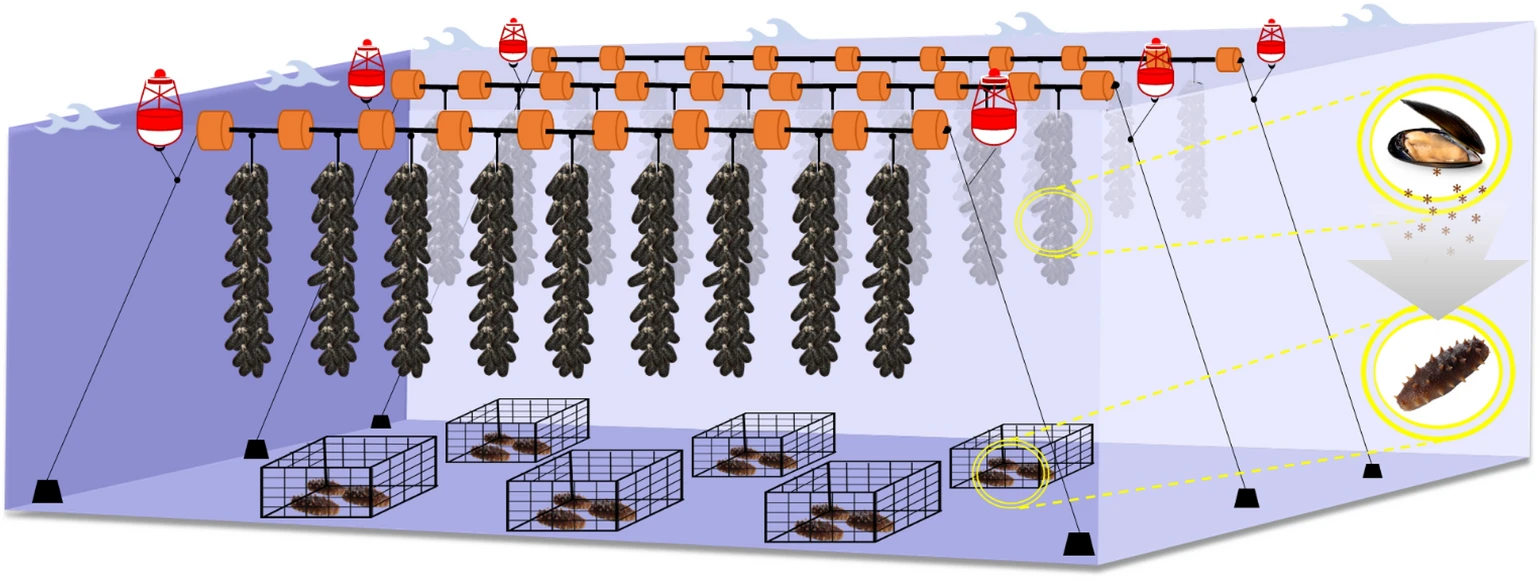 - [Teripang Hatchery video](https://www.youtube.com/watch?feature=shared&v=iG1IX73R1D4)
- [Seacuucumber Processing](https://youtu.be/hkuZCiMJy1s?si=U7Xo-IzJ5vAngoRn)
- [Seacucumber investment](https://www.youtube.com/watch?v=u5MmzsAoXOk)
[seacucumber](https://www.ctsa.org/files/publications/SeaCucumberHatcheryManual.pdf)
- [start business seacucumber](https://youtu.be/_Qa1R2EEBCg?si=hB4PWzQhXBMunqJA)
- [Brackish shrimp culture](http://www.agritech.tnau.ac.in/fishery/fish_cul_brackish_shrimps_stock.html)
Market trends
---
The dried air bladders called fish maws are exported mainly to
* China and Singapore for the manufacture of isinglass, which is used in beverage and cosmetic
industry as well as Chinese traditional medicines (Dutta et al., 2014). The lesser and medium sciaenids are mostly
sold in fresh condition at the local markets or iced and transported to distant interior markets of Odisha, West
- [x] Write the press release
- [ ] Update the website
- [ ] Contact the media
# [Tilapia](https://youtu.be/7SOVLYYgyCE?si=Z3zplqT-GU7pJFfF)
# [Catfish](https://www.youtube.com/watch?v=YoI2QocTmlQ)
# [sandfish](https://www.sciencedirect.com/science/article/pii/S2352513424000334)
Grow-out operations in central Vietnam are capable of producing market-size sandfish (350–400 g), from 2–5 g juveniles, after approximately 12 months in earthen pond-based culture.
However, the onset of the wet season in Vietnam (typically from May to early November) and resulting reduction in the salinity of culture water,
may impact productivity through reduced growth rates and survival (Mills et al., 2012).
Vietnamese farmers have consequently developed an ‘advanced nursery’ phase, where 2–5 g juveniles are cultured at high density in ponds with organic matter-rich sediment (>50,000 ind./ha compared
to ∼10,000 ind./ha which is the standard grow-out density), until they reach a size of ca. 50 g.
This permits ‘short-cropping’ during the grow-out phase, because when larger juveniles are grown out, they can reach the target harvest weight of 350–400 g within 7–9 months
and experience higher rates of survival (Mills et al., 2012).
The goal of this study was therefore to undertake a preliminary assessment of the feasibility of supplemental feeding to support short-cropping culture of sandfish in Vietnam by:
1. Evaluating the growth and survival performance of sandfish juveniles offered two different types of locally-sourced seaweed-based supplemental feeds (Sargassum sp. and Gracilaria verrucosa)
processed by both fermentation and pulverisation;
2. Determining an optimal stocking density for juveniles offered supplemental feeding; and
3. Applying the best-performing supplemental feed, determined from (1) during large-scale earthen-pond culture to assess the feasibility of commercial-scale short cropping.
Supplemental feed preparation
===
Supplemental feeds were prepared from commercially available wild-sourced seaweed collected from coastal regions in Khánh Hòa Province, Vietnam, which is readily available in dried form (Hong and Ha, 2022). Fresh seaweed is first cleaned at the collection site using seawater to remove sand, debris, epiphytic growths and other extraneous matter attached to thalli and, prior to sun-drying, was rinsed with freshwater to remove salt residue. Both species of dried seaweed were powdered to a particle size of 350–450 µm using a high-speed dry grinding machine (2 kg capacity; 4000 W; model RRH2000A; Riri Hong Ltd) to produce the pulverised supplemental feeds. The fermented diets were prepared in batches as required. To prepare a single batch of fermented feed, 10 kg of dried seaweed powder was mixed with 2.5 g of a commercially-available livestock feed probiotic mixture (BIO-MEN animal feed brewing yeast/Men ủ thức ăn chăn nuôi BIO-MEN manufactured by Vườn Sinh Thái/Eco Garden, Vietnam), and 10 L of freshwater. The probiotic mixture comprised Saccharomyces boulardii (at a concentration of 1010-1014 Colony Forming Units; CFU), Lactobacillus acidophilus (1010 CFU) and Bacillus subtilis (1010 CFU) per g, respectively. This product had a maximum moisture content of 10%, sand/grit content of 2% and used corn flour and rice bran as the probiotic carrier agents (https://vuonsinhthai.com.vn/men-u-vi-sinh-thao-duoc-u-chin-thuc-an-chan-nuoi.html
).
# Pearl Oyster
# [Scallop](https://www.e-fas.org/archive/view_article?pid=fas-27-11-709)
1. Chlamys farreri,
2. Argopecten irradians,
3. Pactinopecten yessoensis
4. and Chlamys nobilis
# use of oyster shell
The easiest way to avoid this problem is to only use aged shell in your setting tanks. Every shell used in the system should be aged
at least a full year out in the open where it will be is exposed to weather and other factors that will remove the organic material from the shells. Once this ageing process
is completed, it is best if the shells are washed or cleaned to remove as much dirt and small shell fragments from the cultch as possible. When you have clean cultch material
it is ready to be containerized for use in your setting system.
## Amorphous calcium carbonate (ACC)
is a non-crystalline form of calcium carbonate, and it is composed of aggregated nano-size primary particles.
Here, we evaluated its anti-cancer effect postulated relative to its buffering capabilities in lung cancer.
# Aeration
The most common approach is to use aeration. Most setting tanks are fairly shallow (6 feet deep or less) and this lends itself
to aeration by rotary blower. Rotary blowers are used because they provide high volumes of air at low pressure.
They are more efficient than compressors and do not introduce oil into the system.
Blowers should be sized to provide a gentle rolling movement throughout the entire setting tank. When installing aeration, make sure that water from the setting tanks is
not allowed by gravity to flow backwards into the blower when the blower is off.
The easiest ways to do this are either to install the blower above the highest water level of the setting tanks or to add a section of pipe that extends above the high water mark.
Getting air from the blower to the tanks is usually done through PVC pipes. Pipes
should be sized according to the volume of the setting tanks but, with smaller tanks
capable of holding 200-300 shell bags, 1.5 to 2 inch inside diameter pipes are
sufficient. Larger tanks will require larger diameter aeration lines. Blowers used in
remote setting do not create much pressure and therefore the use of larger pipe is
required. Pipes should be drilled with 3/8” holes about every 8 to 12 inches along
the length of the pipe to provide adequate aeration. Aeration pipes should be spaced
apart to allow a gentle flow to be created when the air is on. For example, a 12 foot
diameter tank with 3 or 4 pipes spaced at the bottom of the tank provides sufficient
aeration for good settlement to occur.
It is important that aeration pipes used inside the tanks NOT be glued together. These pipes will fill with sediment, have oyster larvae settle on them, and other things that
require them to be cleaned inside and out. In fact, each time a setting tank is broken down and reloaded with cultch, the air pipes should
be taken apart and thoroughly cleaned inside and out. This can be done with a brush on a
rope and fresh water, another good reason to use larger diameter piping. Care should be taken to remove ALL newly settled oyster spat
from the pipes and any other surface in the setting tank. If the tanks are re-used these spat will continue to grow. These spat
are voracious feeders and will compete with the next batch of larval oysters for the food in the tank and as they get bigger will provide substrate for oysters to settle on
# Instant Algae
Instant algae is your easy solution for replacing or supplementing live microalgae in commercial fish, shrimp, shellfish and ornamental hatcheries, universities and research centers. It is real marine microalgae, grown under laboratory conditions and concentrated for easy storage and long life. Instant algae is not alive and cannot be used as starter cultures – it is an inexpensive bulk feed.
Nannochloropsis
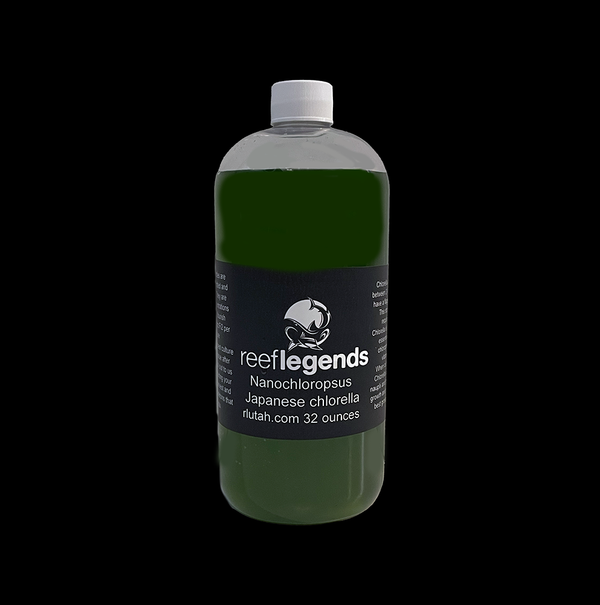
These are small green algaes that are extensively used in the aquaculture industry for growing small zooplankton such as rotifers and for greenwater. They are also used in reef tanks for feeding corals and other filter feeders. It is 3600 times as dense as cultured algae, so 1 liter replaces almost 4 metric tons of live algae! Available in 1-quart & 1-pint bottles, and 1-liter bags. Nannochloropsis is the single best food for growing rotifers. It has a very high EPA level and can be frozen for long term storage. It also works well for greenwater.
Shellfish hatcheries: works very well with mussels. It has not been traditionally used with oysters and clams, however a study currently being done at a university in Los Angeles indicates that it can work as well or better than Isochrysis and Pavlova with larvae and post set. Storage: instant algae nannochloropsis can be stored in a refrigerator for 3 months (best if stored at -1° to 3°C) or it can be frozen for longer shelf life (2+ years). When frozen, the algae will “hard-freeze” like ice.
Pavlova
Pavlova is a small golden/brown flagellate that is very similar to Isochrysis. It has a very high DHA profile and is excellent for enriching rotifers and other zooplankton. It is very difficult to develop the Pavlova, that is the reason why it is not produced by many incubation facilities. Pavlova is similar in nutritional profile to Isochrysis, however it has a more sophisticated sterol composition so it is very popular with cold water fish hatcheries (such as cod) for enriching rotifers.
Pavlova has both a high DHA and EPA profile so its good for enriching zooplankton. We have received very good reports on larval survival from hatcheries that use it to enrich brine shrimp. Pavlova works very well for oysters, clams, mussels and scallops. It is also used to increase the DHA/EPA levels in broodstock.
Isochrysis
Isochrysis is a small golden/brown flagellate that is very commonly used in the aquaculture industry. It is high in DHA and often used to enrich zooplankton such as rotifers or Artemia. Used for DHA enrichment of rotifers.
It is also a good size for feeding brine shrimp and copepods. Isochrysis is the most commonly used algae for oysters, clams, mussels and scallops.
Tetraselmis
Tetraselmis is a large green flagellate with a very high lipid level. It also contains natural amino acids that stimulate feeding in marine animals. It is an excellent feed for larval shrimp. Used in conjunction with Nannochloropsis for producing rotifers.
It is also a good size for feeding brine shrimp. A standard feed for oysters, clams, mussels and scallops.
Rotifer Diet HD
Rotifer Diet™ HD is a marine microalgae feed product for producing high quality, high density, low cost rotifers. Rotifer Diet HD is a combination of the microalgae species Nannochloropsis & Tetraselmis and results in a 20% increase in rotifer volume over pure Nannochloropsis.
It is a 100% complete feeding solution, needing no other feed additives to produce dense cultures. Rotifer Diet HD was specifically designed for high density rotifer systems, but also works exceptionally well in low density and batch cultures.
Thalassiosira weissflogii
Thalassiosira weissflogii is a large diatom (6-20μm x 8-15μm) that is used in the shrimp and shellfish larviculture industry. This algae is considered by several hatcheries to be the single best algae for larval shrimp. The large cell size (16 times the biomass of Chaetoceros and 3 times the biomass of Tetraselmis) extends the algae feeding period until the end of the PL stage. During the winter, this algae is about 15 microns, but shrinks to about 5 microns during the summer.
The color of TW varies from brown to green to yellow, depending on the amount of chlorophyll in the culture. This color change does not in any way affect the quality of the algae. Good for feeding copepods and brine shrimp. Due to its large size, TW is a very good feed for post-set (200 microns and larger) oysters, clams, mussels, scallops, and for broodstock conditioning.
Shellfish Diet
Shellfish diet is a mix of five marine microalgae that all have demonstrated success with a variety of shellfish including oysters, clams, mussels and scallops. A mixed diet provides a much better nutritional profile for all types of shellfish, increasing both growth rates and survival. Shellfish diet can be used with preset larvae all the way up through broodstock and will typically perform as well as algae so it can be used as a complete live algae replacement. 1/4 of Shellfish diet will replace the equivalent to 1800 liters of dense algae culture. This product is available in plastic bottles of 1/4, 1-pint and 1-gallon. The quantity of cells changes depending on the time of the year, but is approximately 2 billions of cells per ml.
# Sargassum Powder
- [Teripang Hatchery video](https://www.youtube.com/watch?feature=shared&v=iG1IX73R1D4)
- [Seacuucumber Processing](https://youtu.be/hkuZCiMJy1s?si=U7Xo-IzJ5vAngoRn)
- [Seacucumber investment](https://www.youtube.com/watch?v=u5MmzsAoXOk)
[seacucumber](https://www.ctsa.org/files/publications/SeaCucumberHatcheryManual.pdf)
- [start business seacucumber](https://youtu.be/_Qa1R2EEBCg?si=hB4PWzQhXBMunqJA)
- [Brackish shrimp culture](http://www.agritech.tnau.ac.in/fishery/fish_cul_brackish_shrimps_stock.html)
Market trends
---
The dried air bladders called fish maws are exported mainly to
* China and Singapore for the manufacture of isinglass, which is used in beverage and cosmetic
industry as well as Chinese traditional medicines (Dutta et al., 2014). The lesser and medium sciaenids are mostly
sold in fresh condition at the local markets or iced and transported to distant interior markets of Odisha, West
- [x] Write the press release
- [ ] Update the website
- [ ] Contact the media
# [Tilapia](https://youtu.be/7SOVLYYgyCE?si=Z3zplqT-GU7pJFfF)
# [Catfish](https://www.youtube.com/watch?v=YoI2QocTmlQ)
# [sandfish](https://www.sciencedirect.com/science/article/pii/S2352513424000334)
Grow-out operations in central Vietnam are capable of producing market-size sandfish (350–400 g), from 2–5 g juveniles, after approximately 12 months in earthen pond-based culture.
However, the onset of the wet season in Vietnam (typically from May to early November) and resulting reduction in the salinity of culture water,
may impact productivity through reduced growth rates and survival (Mills et al., 2012).
Vietnamese farmers have consequently developed an ‘advanced nursery’ phase, where 2–5 g juveniles are cultured at high density in ponds with organic matter-rich sediment (>50,000 ind./ha compared
to ∼10,000 ind./ha which is the standard grow-out density), until they reach a size of ca. 50 g.
This permits ‘short-cropping’ during the grow-out phase, because when larger juveniles are grown out, they can reach the target harvest weight of 350–400 g within 7–9 months
and experience higher rates of survival (Mills et al., 2012).
The goal of this study was therefore to undertake a preliminary assessment of the feasibility of supplemental feeding to support short-cropping culture of sandfish in Vietnam by:
1. Evaluating the growth and survival performance of sandfish juveniles offered two different types of locally-sourced seaweed-based supplemental feeds (Sargassum sp. and Gracilaria verrucosa)
processed by both fermentation and pulverisation;
2. Determining an optimal stocking density for juveniles offered supplemental feeding; and
3. Applying the best-performing supplemental feed, determined from (1) during large-scale earthen-pond culture to assess the feasibility of commercial-scale short cropping.
Supplemental feed preparation
===
Supplemental feeds were prepared from commercially available wild-sourced seaweed collected from coastal regions in Khánh Hòa Province, Vietnam, which is readily available in dried form (Hong and Ha, 2022). Fresh seaweed is first cleaned at the collection site using seawater to remove sand, debris, epiphytic growths and other extraneous matter attached to thalli and, prior to sun-drying, was rinsed with freshwater to remove salt residue. Both species of dried seaweed were powdered to a particle size of 350–450 µm using a high-speed dry grinding machine (2 kg capacity; 4000 W; model RRH2000A; Riri Hong Ltd) to produce the pulverised supplemental feeds. The fermented diets were prepared in batches as required. To prepare a single batch of fermented feed, 10 kg of dried seaweed powder was mixed with 2.5 g of a commercially-available livestock feed probiotic mixture (BIO-MEN animal feed brewing yeast/Men ủ thức ăn chăn nuôi BIO-MEN manufactured by Vườn Sinh Thái/Eco Garden, Vietnam), and 10 L of freshwater. The probiotic mixture comprised Saccharomyces boulardii (at a concentration of 1010-1014 Colony Forming Units; CFU), Lactobacillus acidophilus (1010 CFU) and Bacillus subtilis (1010 CFU) per g, respectively. This product had a maximum moisture content of 10%, sand/grit content of 2% and used corn flour and rice bran as the probiotic carrier agents (https://vuonsinhthai.com.vn/men-u-vi-sinh-thao-duoc-u-chin-thuc-an-chan-nuoi.html
).
# Pearl Oyster
# [Scallop](https://www.e-fas.org/archive/view_article?pid=fas-27-11-709)
1. Chlamys farreri,
2. Argopecten irradians,
3. Pactinopecten yessoensis
4. and Chlamys nobilis
# use of oyster shell
The easiest way to avoid this problem is to only use aged shell in your setting tanks. Every shell used in the system should be aged
at least a full year out in the open where it will be is exposed to weather and other factors that will remove the organic material from the shells. Once this ageing process
is completed, it is best if the shells are washed or cleaned to remove as much dirt and small shell fragments from the cultch as possible. When you have clean cultch material
it is ready to be containerized for use in your setting system.
## Amorphous calcium carbonate (ACC)
is a non-crystalline form of calcium carbonate, and it is composed of aggregated nano-size primary particles.
Here, we evaluated its anti-cancer effect postulated relative to its buffering capabilities in lung cancer.
# Aeration
The most common approach is to use aeration. Most setting tanks are fairly shallow (6 feet deep or less) and this lends itself
to aeration by rotary blower. Rotary blowers are used because they provide high volumes of air at low pressure.
They are more efficient than compressors and do not introduce oil into the system.
Blowers should be sized to provide a gentle rolling movement throughout the entire setting tank. When installing aeration, make sure that water from the setting tanks is
not allowed by gravity to flow backwards into the blower when the blower is off.
The easiest ways to do this are either to install the blower above the highest water level of the setting tanks or to add a section of pipe that extends above the high water mark.
Getting air from the blower to the tanks is usually done through PVC pipes. Pipes
should be sized according to the volume of the setting tanks but, with smaller tanks
capable of holding 200-300 shell bags, 1.5 to 2 inch inside diameter pipes are
sufficient. Larger tanks will require larger diameter aeration lines. Blowers used in
remote setting do not create much pressure and therefore the use of larger pipe is
required. Pipes should be drilled with 3/8” holes about every 8 to 12 inches along
the length of the pipe to provide adequate aeration. Aeration pipes should be spaced
apart to allow a gentle flow to be created when the air is on. For example, a 12 foot
diameter tank with 3 or 4 pipes spaced at the bottom of the tank provides sufficient
aeration for good settlement to occur.
It is important that aeration pipes used inside the tanks NOT be glued together. These pipes will fill with sediment, have oyster larvae settle on them, and other things that
require them to be cleaned inside and out. In fact, each time a setting tank is broken down and reloaded with cultch, the air pipes should
be taken apart and thoroughly cleaned inside and out. This can be done with a brush on a
rope and fresh water, another good reason to use larger diameter piping. Care should be taken to remove ALL newly settled oyster spat
from the pipes and any other surface in the setting tank. If the tanks are re-used these spat will continue to grow. These spat
are voracious feeders and will compete with the next batch of larval oysters for the food in the tank and as they get bigger will provide substrate for oysters to settle on
# Instant Algae
Instant algae is your easy solution for replacing or supplementing live microalgae in commercial fish, shrimp, shellfish and ornamental hatcheries, universities and research centers. It is real marine microalgae, grown under laboratory conditions and concentrated for easy storage and long life. Instant algae is not alive and cannot be used as starter cultures – it is an inexpensive bulk feed.
Nannochloropsis
These are small green algaes that are extensively used in the aquaculture industry for growing small zooplankton such as rotifers and for greenwater. They are also used in reef tanks for feeding corals and other filter feeders. It is 3600 times as dense as cultured algae, so 1 liter replaces almost 4 metric tons of live algae! Available in 1-quart & 1-pint bottles, and 1-liter bags. Nannochloropsis is the single best food for growing rotifers. It has a very high EPA level and can be frozen for long term storage. It also works well for greenwater.
Shellfish hatcheries: works very well with mussels. It has not been traditionally used with oysters and clams, however a study currently being done at a university in Los Angeles indicates that it can work as well or better than Isochrysis and Pavlova with larvae and post set. Storage: instant algae nannochloropsis can be stored in a refrigerator for 3 months (best if stored at -1° to 3°C) or it can be frozen for longer shelf life (2+ years). When frozen, the algae will “hard-freeze” like ice.
Pavlova
Pavlova is a small golden/brown flagellate that is very similar to Isochrysis. It has a very high DHA profile and is excellent for enriching rotifers and other zooplankton. It is very difficult to develop the Pavlova, that is the reason why it is not produced by many incubation facilities. Pavlova is similar in nutritional profile to Isochrysis, however it has a more sophisticated sterol composition so it is very popular with cold water fish hatcheries (such as cod) for enriching rotifers.
Pavlova has both a high DHA and EPA profile so its good for enriching zooplankton. We have received very good reports on larval survival from hatcheries that use it to enrich brine shrimp. Pavlova works very well for oysters, clams, mussels and scallops. It is also used to increase the DHA/EPA levels in broodstock.
Isochrysis
Isochrysis is a small golden/brown flagellate that is very commonly used in the aquaculture industry. It is high in DHA and often used to enrich zooplankton such as rotifers or Artemia. Used for DHA enrichment of rotifers.
It is also a good size for feeding brine shrimp and copepods. Isochrysis is the most commonly used algae for oysters, clams, mussels and scallops.
Tetraselmis
Tetraselmis is a large green flagellate with a very high lipid level. It also contains natural amino acids that stimulate feeding in marine animals. It is an excellent feed for larval shrimp. Used in conjunction with Nannochloropsis for producing rotifers.
It is also a good size for feeding brine shrimp. A standard feed for oysters, clams, mussels and scallops.
Rotifer Diet HD
Rotifer Diet™ HD is a marine microalgae feed product for producing high quality, high density, low cost rotifers. Rotifer Diet HD is a combination of the microalgae species Nannochloropsis & Tetraselmis and results in a 20% increase in rotifer volume over pure Nannochloropsis.
It is a 100% complete feeding solution, needing no other feed additives to produce dense cultures. Rotifer Diet HD was specifically designed for high density rotifer systems, but also works exceptionally well in low density and batch cultures.
Thalassiosira weissflogii
Thalassiosira weissflogii is a large diatom (6-20μm x 8-15μm) that is used in the shrimp and shellfish larviculture industry. This algae is considered by several hatcheries to be the single best algae for larval shrimp. The large cell size (16 times the biomass of Chaetoceros and 3 times the biomass of Tetraselmis) extends the algae feeding period until the end of the PL stage. During the winter, this algae is about 15 microns, but shrinks to about 5 microns during the summer.
The color of TW varies from brown to green to yellow, depending on the amount of chlorophyll in the culture. This color change does not in any way affect the quality of the algae. Good for feeding copepods and brine shrimp. Due to its large size, TW is a very good feed for post-set (200 microns and larger) oysters, clams, mussels, scallops, and for broodstock conditioning.
Shellfish Diet
Shellfish diet is a mix of five marine microalgae that all have demonstrated success with a variety of shellfish including oysters, clams, mussels and scallops. A mixed diet provides a much better nutritional profile for all types of shellfish, increasing both growth rates and survival. Shellfish diet can be used with preset larvae all the way up through broodstock and will typically perform as well as algae so it can be used as a complete live algae replacement. 1/4 of Shellfish diet will replace the equivalent to 1800 liters of dense algae culture. This product is available in plastic bottles of 1/4, 1-pint and 1-gallon. The quantity of cells changes depending on the time of the year, but is approximately 2 billions of cells per ml.
# Sargassum Powder
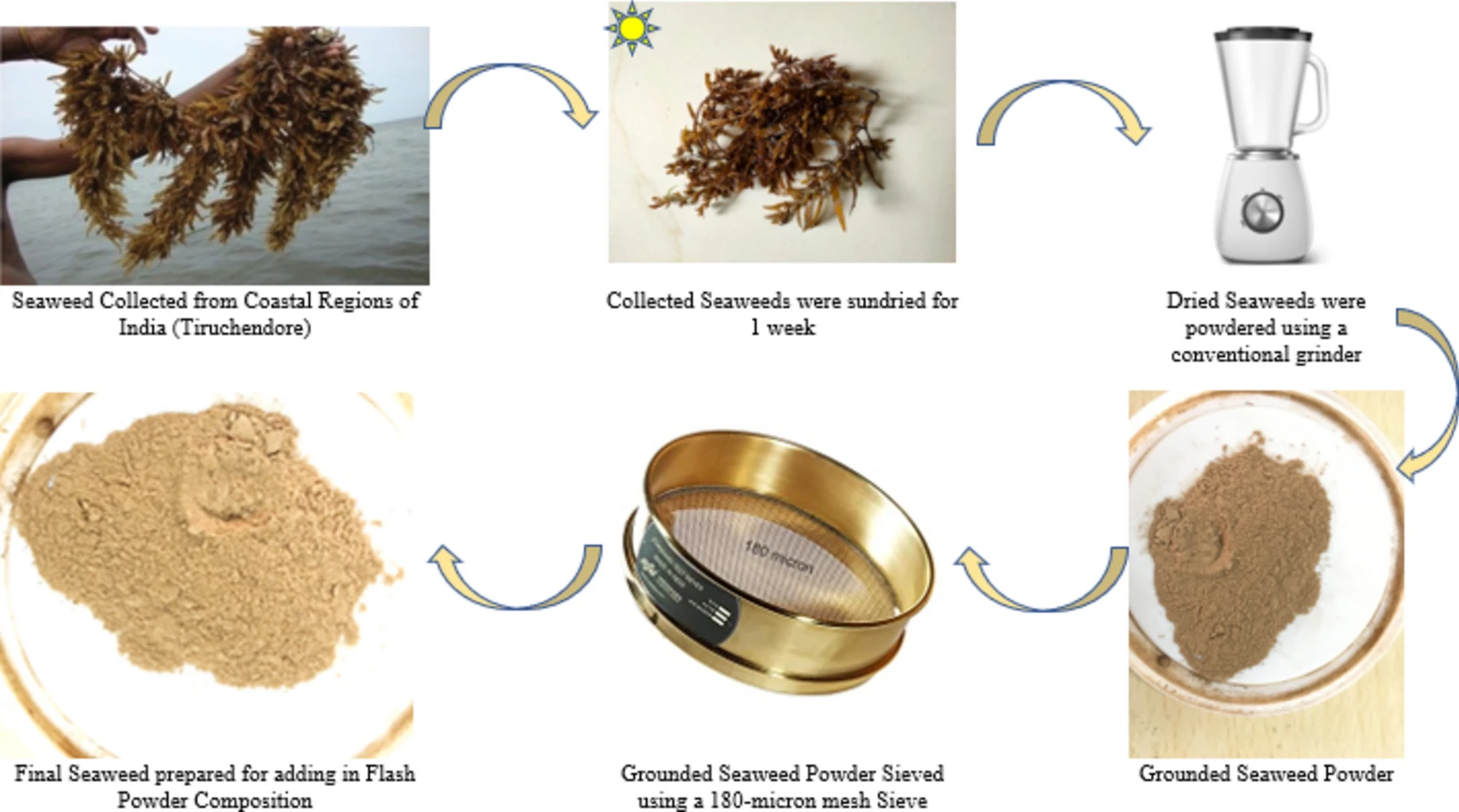 # Spirulina
 Spirulina powder, a type of blue-green algae, is often cultivated in both freshwater and seawater environments. Seawater can be a viable and even advantageous medium for growing spirulina, particularly for reducing the need for additional nutrients. However, spirulina grown in seawater may have a higher iodine content and require careful drying processes to maintain qualit.
Seawater can be a cost-effective and potentially more sustainable medium for spirulina cultivation, especially when supplemented with nutrients. Studies have shown that spirulina can thrive in seawater, and in some cases, even exhibit increased carbohydrate production and biomass concentration compared to freshwater cultures.
The quality of spirulina, regardless of the cultivation medium, depends on factors like the source of the water, the cultivation methods, and the drying process. Spirulina harvested from clean sources and properly dried is essential for ensuring a high-quality product.
A large-scale cultivation experiment demonstrated that Spirulina platensis, strain SCS, can be adapted togrow in seawater enriched with a commercial compound fertilizer (N: Ρ: Κ = 12:12:12), NaHCO3 andFeSO4. To avoid excess precipitation, a compound fertilizer, which contained phosphate, was supplied bydiffusion through a tubular dialysis membrane and a small amount of NaHCO3 was added. The average yieldof biomass in 84 days of consecutive production was 10.3 g (dry weight) m~2 day"1. The protein and aminoacids contents in the product were 66.6% and 62.2% respectively. We have shown that outdoor cultivationof Spirulina in seawater has potential for industrial production without involving valuable farm land, employingless expensive culture medium which can be recycled and giving higher yield and higher quality products
Biochemical Changes
One of the most interesting side effects of culturing spirulina in seawater is that the carbohydrate content of it skyrockets while the protein content drops significantly.
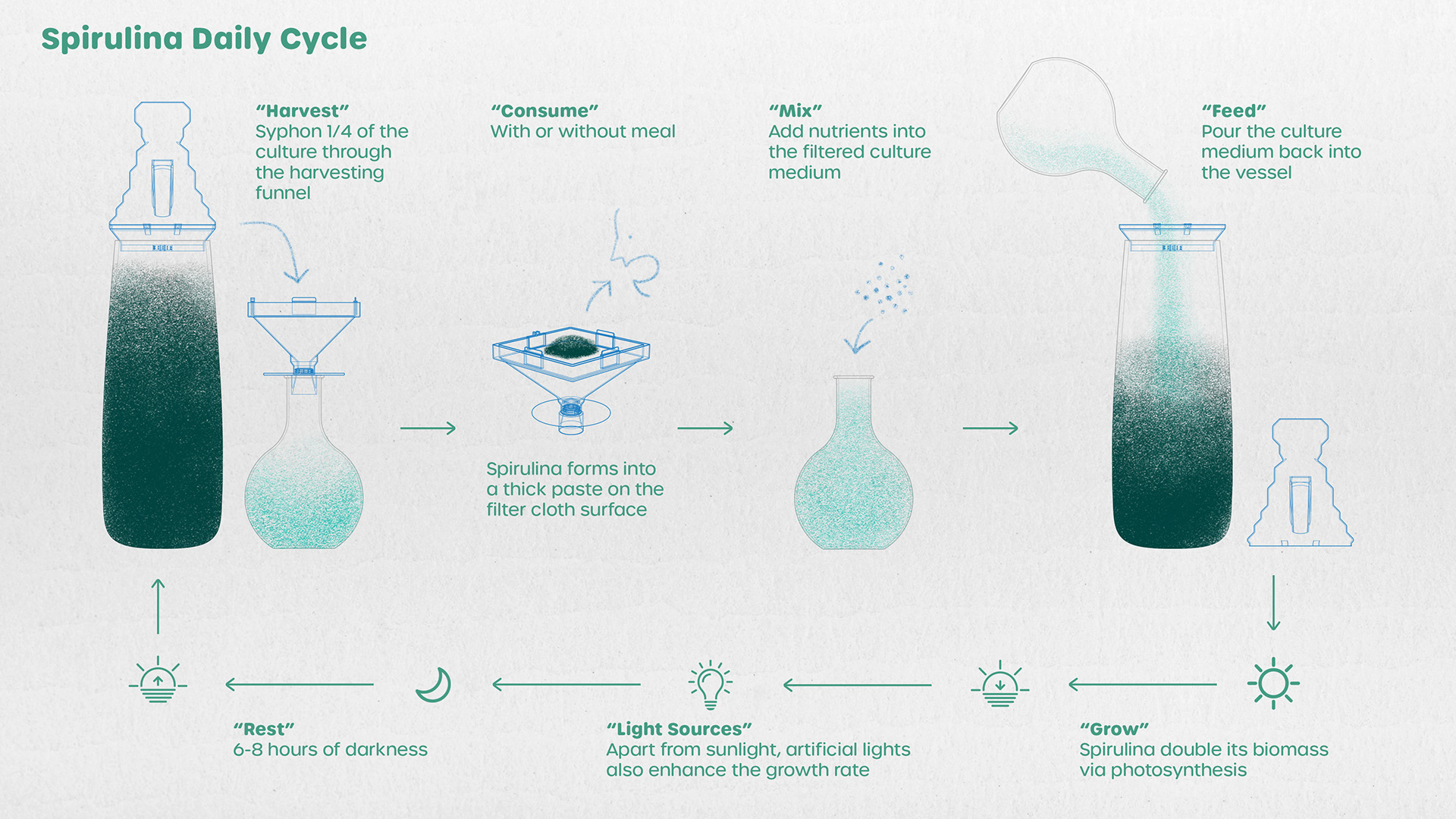
Spirulina harvesting
---
involves separating the algae from its liquid growth medium. This is typically done through filtration or centrifugation, followed by drying to produce a powder or flakes. The harvested spirulina can then be used as a food supplement or in other application
[Harvest](https://spirulinasociety.org/how-to-harvest)
Spirulina powder, a type of blue-green algae, is often cultivated in both freshwater and seawater environments. Seawater can be a viable and even advantageous medium for growing spirulina, particularly for reducing the need for additional nutrients. However, spirulina grown in seawater may have a higher iodine content and require careful drying processes to maintain qualit.
Seawater can be a cost-effective and potentially more sustainable medium for spirulina cultivation, especially when supplemented with nutrients. Studies have shown that spirulina can thrive in seawater, and in some cases, even exhibit increased carbohydrate production and biomass concentration compared to freshwater cultures.
The quality of spirulina, regardless of the cultivation medium, depends on factors like the source of the water, the cultivation methods, and the drying process. Spirulina harvested from clean sources and properly dried is essential for ensuring a high-quality product.
A large-scale cultivation experiment demonstrated that Spirulina platensis, strain SCS, can be adapted togrow in seawater enriched with a commercial compound fertilizer (N: Ρ: Κ = 12:12:12), NaHCO3 andFeSO4. To avoid excess precipitation, a compound fertilizer, which contained phosphate, was supplied bydiffusion through a tubular dialysis membrane and a small amount of NaHCO3 was added. The average yieldof biomass in 84 days of consecutive production was 10.3 g (dry weight) m~2 day"1. The protein and aminoacids contents in the product were 66.6% and 62.2% respectively. We have shown that outdoor cultivationof Spirulina in seawater has potential for industrial production without involving valuable farm land, employingless expensive culture medium which can be recycled and giving higher yield and higher quality products
Biochemical Changes
One of the most interesting side effects of culturing spirulina in seawater is that the carbohydrate content of it skyrockets while the protein content drops significantly.
Spirulina harvesting
---
involves separating the algae from its liquid growth medium. This is typically done through filtration or centrifugation, followed by drying to produce a powder or flakes. The harvested spirulina can then be used as a food supplement or in other application
[Harvest](https://spirulinasociety.org/how-to-harvest)